
Why Chasing Past Performance Destroys Your Portfolio
Every single mutual fund document carries the same bold warning: “Past performance is not an indicator of future returns.” Yet, almost everyone ignores it. It is very natural to open an app, look at which fund gave the highest return over the last 12 months, and invest right there. But in reality, this is one of the most common ways families accidentally hurt their returns.
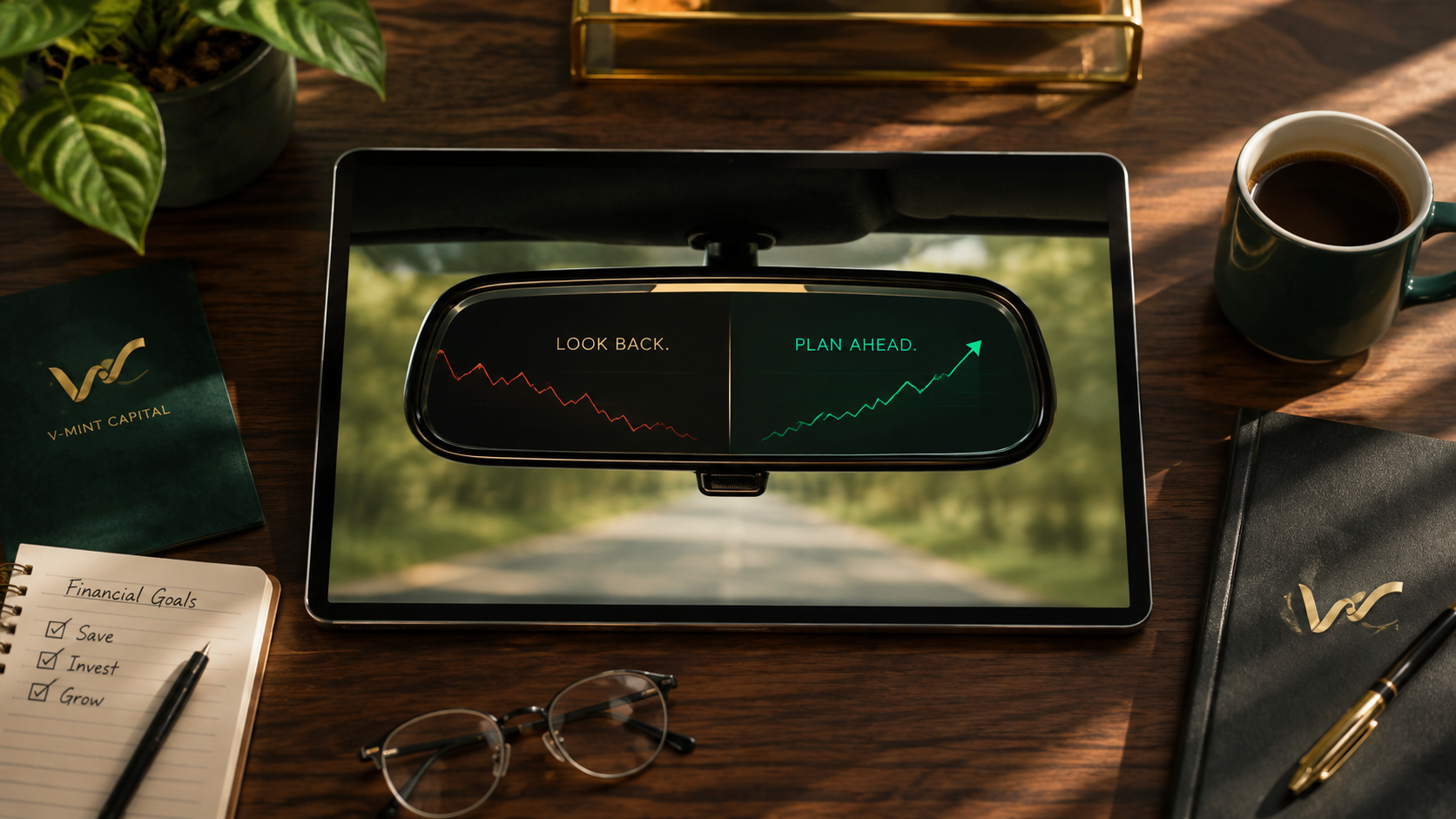
Investing based purely on last year’s top chart is called “Rearview Mirror Investing.” Today, we explain why last year’s winning fund so often becomes next year’s laggard, and how you can select investments with genuine clarity.
“Financial markets move in natural cycles. By the time a fund makes headline news for delivering a massive 50% return, most of that cycle’s growth has already happened. Buying then often means buying right before things cool down.”
Priyam Verma, V-Mint CapitalThe Natural Law of Market Cycles
Why does chasing past performance fail so often? In financial planning, this is due to a natural principle called Mean Reversion. In simple terms, sectors and funds that grow unusually fast for a short period eventually cool down and return closer to their long-term average.
For example, if an IT or Pharma fund jumps by 50% in a single year, people rush in thinking it will do that every year. But because those companies have become expensive, the sector usually takes a break the following year, while a quieter, overlooked category begins to grow. If you constantly switch into whatever was #1 last year, you end up buying near the top and selling near the bottom.
The Question of Fund Management
Another important detail to remember is management. A fund might have an incredible 5-year track record, but the experienced fund manager who created those returns may have recently moved on to a new opportunity. Buying based solely on past numbers without checking if the philosophy or team is still the same can lead to surprises.
How We Help You Select Funds for the Long Run
Instead of looking at short-term 1-year rankings, here are the factors we look at when curating the best mutual funds for your family:
- Rolling Returns: Rather than looking at performance on a single date, rolling returns look at how a fund did across hundreds of overlapping 5-to-7 year periods. This shows if a fund delivers steady results in all market weather, or if it just got lucky during a brief surge.
- Downside Protection: Compounding works best when you minimize deep losses. We prioritize funds that hold up relatively well during market corrections. Protecting capital during tough months makes reaching your goals much smoother.
- Asset Allocation Over Fund Names: Decades of research show that having the right balance between growth-oriented equity and safe debt accounts for over 90% of your long-term wealth experience, far more than picking any single scheme.
Invest with Clarity and Peace of Mind
You don’t need to chase trends to build meaningful wealth. Let V-Mint Capital design an all-weather portfolio aligned with your real family goals, built to grow steadily over time.
Talk to Our Team