
How to Choose Your First Mutual Fund in India (10-Point Checklist)
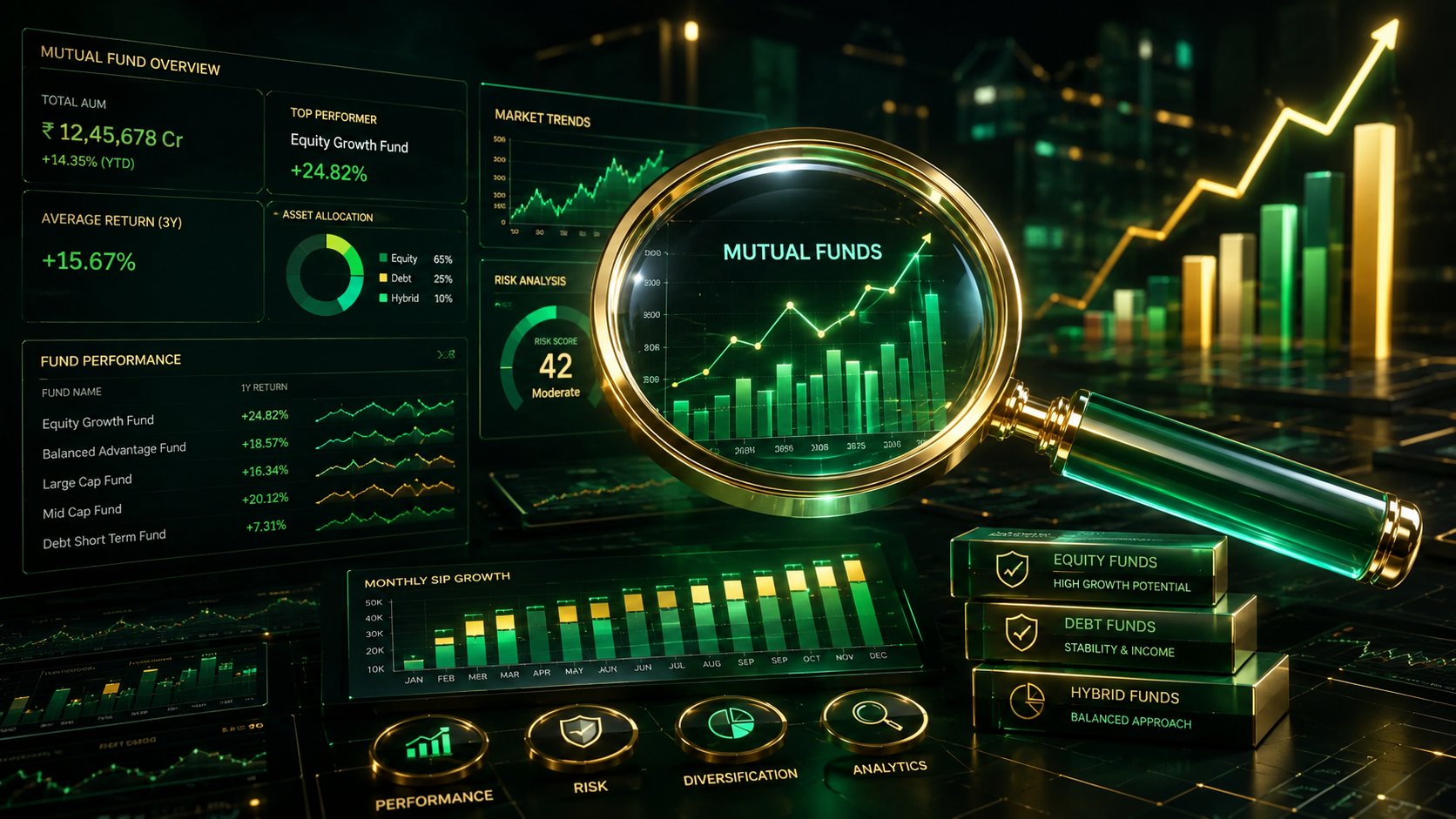
There are currently over 2,500 mutual fund schemes available in India. If you log into any standard investing app, you will immediately be bombarded with lists of “Top Performing Funds” showing 40% or 50% returns over the last year.
Buying a mutual fund simply because it had the highest 1-year return is the single fastest way to destroy your capital. A fund that surged 50% last year likely took massive, concentrated risks to achieve it, and could easily crash the next year.
At V-Mint Capital, we do not guess. We use a strict institutional framework to filter out the noise. If you are preparing to start your mutual fund portfolio, here is the exact 10-point checklist you must verify before investing your hard-earned money.
1. Match the Asset Class to Your Time Horizon
Never put money you need in 2 years into a Small-Cap Equity Fund. The rule is simple:
- 0 to 3 Years: Liquid Funds, Arbitrage Funds, or Short-Term Debt Funds.
- 3 to 5 Years: Large-Cap Funds, Nifty 50 Index Funds, or Balanced Hybrid Funds.
- 7+ Years: Mid-Cap, Small-Cap, and aggressive Flexi-Cap Funds.
2. Check “Rolling Returns”, Not Trailing Returns
“Trailing returns” just measure from today looking back exactly 1 year or 3 years. It’s a single snapshot. Rolling Returns measure the fund’s performance across hundreds of different dates, proving whether the fund manager is consistently excellent across bull and bear markets, or if they just got lucky once.
3. The Downside Capture Ratio
Everyone makes money in a bull market. The true test of a mutual fund is how it behaves when the market crashes. The Downside Capture Ratio measures this. If the market falls by 10%, but your fund only falls by 7%, it has a strong downside capture ratio. Protecting capital is more important than chasing aggressive highs.
4. Analyze the Expense Ratio
The Expense Ratio is the annual fee the Asset Management Company (AMC) charges to manage your money. Over a 20-year Systematic Investment Plan (SIP), even a 0.5% difference in expense ratio can eat away lakhs of rupees from your final compounding corpus. Always compare the expense ratio against category peers.
5. Fund Manager Consistency & Pedigree
A mutual fund is only as good as the human managing it. If a fund showed spectacular returns over the last 5 years, but the fund manager who generated those returns quit last month, the past performance is irrelevant. Always check how long the current manager has been at the helm.
6. Asset Under Management (AUM) Size
Size matters, but context is key.
- Debt & Large-Cap Funds: A massive AUM (e.g., ₹30,000 Crores) is excellent. It provides liquidity and stability.
- Small-Cap Funds: A massive AUM is a curse. It becomes impossible for the fund manager to efficiently buy and sell small, illiquid companies without distorting their stock prices.
7. Understand Standard Deviation & Alpha
Standard Deviation measures volatility. If two funds give the same 12% return, but Fund A gives you a smooth ride while Fund B swings violently up and down, Fund A has a lower standard deviation and is vastly superior for your peace of mind.
Alpha measures how much extra return the fund manager generated above the benchmark index, proving they actually earned their expense ratio fee.
8. Portfolio Overlap
Beginners often buy 5 different Large-Cap mutual funds thinking they are “diversifying.” In reality, all 5 funds are buying the exact same shares of Reliance, HDFC, and TCS. This is called Portfolio Overlap. You are paying 5 different expense ratios for the exact same portfolio. Two to four well-chosen, non-overlapping funds are all you need.
9. Check Exit Loads & Taxation
Most equity mutual funds carry an Exit Load (usually 1%) if you withdraw your money before 12 months. This is to discourage panic selling. Ensure you also factor in the latest Capital Gains Taxes (12.5% for LTCG, 20% for STCG) into your final withdrawal calculations.
10. Goal Alignment (The V-Mint Priority)
The final and most critical parameter: Does this fund serve your specific life goal? An aggressive small-cap fund is useless if you need the money for your child’s education in 2 years. Your investments must be subservient to your financial timeline, not the other way around.
Stop Guessing, Start Executing
Do not risk your capital on trial and error. Let V-Mint Capital run these 10 parameters on your behalf to construct a resilient, compounding portfolio. We charge zero advisory fees.
Schedule a Portfolio MappingFrequently Asked Questions
Why Investors Choose V-Mint Capital
We execute sophisticated wealth strategies mapped to your life goals.
AMFI-Registered
Operating compliantly as an officially registered Mutual Fund Distributor (ARN-360741) in India.
Personalized Assistance
No customer service queues. You get direct, accountable portfolio insights tailored to your financial timeline.
100% Digital Process
From paperless KYC verification to advanced portfolio tracking, execute everything securely online.
Transparent Execution
We earn incidental distribution trails directly from AMCs. There are absolutely no hidden advisory fees charged to you.
Serving India & NRIs
Our digital infrastructure seamlessly supports global NRIs with FATCA compliance, KRA updates, and NRE/NRO investments.
Long-Term Philosophy
We ignore short-term market noise. Our strategy focuses entirely on sustainable, compounding wealth creation.