
Things to Keep in Mind When Buying Home & Commercial Fire Insurance in India
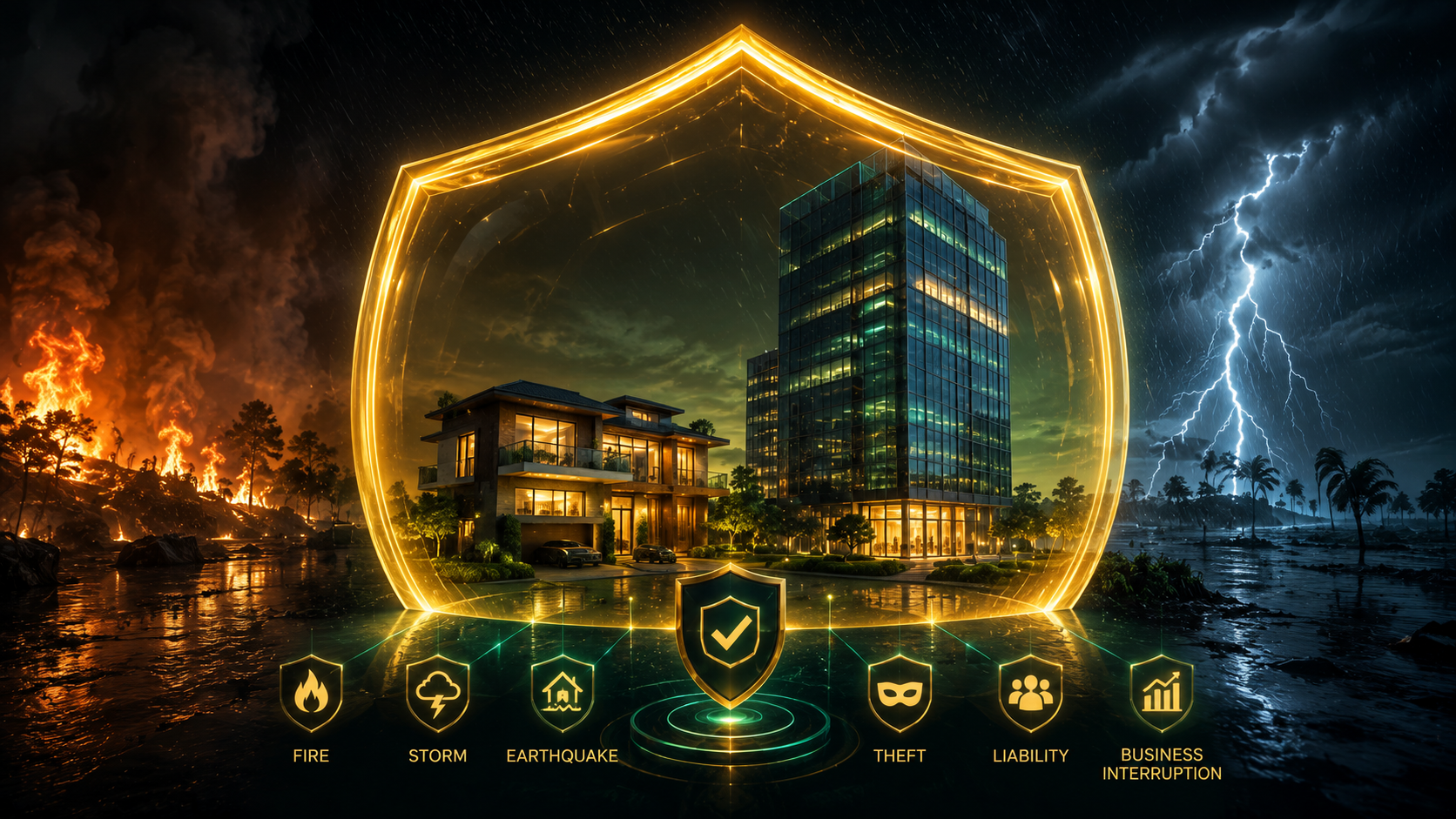
Investors often spend years optimizing their mutual fund SIPs and meticulously planning their tax liabilities, only to leave their largest physical assets completely exposed to Black Swan events. A single short circuit, severe flood, or civil unrest can instantly wipe out decades of wealth tied up in your residential home or commercial business.
To streamline the often-confusing general insurance market, the Insurance Regulatory and Development Authority of India (IRDAI) introduced highly standardized policies: Bharat Griha Raksha for residential homes and Bharat Laghu/Sookshma Udyam Suraksha for Small and Medium Enterprises (SMEs). The top insurers in India all utilize these foundational frameworks to provide coverage.
Before you protect your property, here are the critical technical elements you must keep in mind to ensure your General Insurance actually pays out when disaster strikes.
1. The Ultimate Calculation: Reinstatement Value vs Market Value
The biggest mistake property owners make is confusing the real estate value of their property with its insurable value. A standard fire insurance policy does not cover the cost of the land your building sits on—because a fire or flood cannot destroy land.
When calculating your “Sum Insured,” you must understand how the insurer will compensate you:
- Reinstatement Value (New for Old): This is the gold standard. If your building is destroyed, the insurer pays the exact cost required to rebuild or replace the property with a brand new one of the same kind. No depreciation is deducted. The Bharat Griha Raksha and standard commercial policies function on this basis for the building structure.
- Market Value: If you opt for Market Value, the insurer pays the replacement cost minus depreciation based on the age of the building or the machinery. This will almost always result in a shortfall when you attempt to rebuild.
- Agreed Value: Used primarily for home contents like valuable paintings, antiques, or jewelry. You and the insurer agree on a specific valuation certificate upfront.
2. Know the 14 Standard Perils (What is Covered)
Modern standard fire policies (Bharat Griha Raksha and Laghu Udyam Suraksha) cover much more than just fire. They are comprehensive packages protecting against 14 specific perils:
- FLEXA: Fire, Lightning, Explosion, and Aircraft damage.
- Natural Convulsions: Earthquakes, volcanic eruptions, storms, cyclones, typhoons, floods, and inundations. (Yes, standard policies cover earthquakes and floods by default).
- Geological Events: Landslides, rockslides, and subsidence of the land.
- Human Disruptions: Riots, strikes, malicious damage (RSMD), and Acts of Terrorism.
- The “7-Day Theft” Clause: Standard policies typically exclude normal burglary, but they do cover theft that occurs within 7 days of an insured event (like a riot or a flood) when your property is physically vulnerable.
3. Residential Specifics: Bharat Griha Raksha
If you are insuring your home, the Bharat Griha Raksha policy has a unique, highly beneficial feature for contents:
Automatic Content Cover: The policy automatically covers general home contents for an amount equal to 20% of the building’s Sum Insured (subject to a maximum of ₹10 Lakhs). The massive advantage here is that you do not need to provide an itemized list or declare these general contents upfront to claim this base 20%.
4. Commercial Specifics: Bharat Laghu Udyam Suraksha
Designed for enterprises with total insurable assets between ₹5 Crore and ₹50 Crore, the Laghu Udyam Suraksha policy includes several business-critical built-in covers:
- Waiver of Underinsurance (up to 15%): If you accidentally under-declare your asset values by up to 15%, the insurer will not penalize your claim amount.
- Start-Up Expenses: Covers the start-up costs incurred after an insured event (up to ₹5 Lakhs).
- Floater Cover for Stocks: Automatically included, allowing businesses with inventory moving between multiple locations to remain covered.
5. The Hidden Built-In Financial Buffers
When a building burns down, the cost isn’t just the bricks and cement. High-quality policies automatically pay for secondary expenses that occur during reconstruction:
- Architect & Surveyor Fees: Pays up to 5% of the claim amount for the reasonable fees of architects and consulting engineers required to rebuild.
- Debris Removal: Pays up to 2% of the claim amount for the cost of clearing the burnt/destroyed debris from your site.
- Costs Compelled by Municipal Regulations: Covers additional costs mandated by local authorities during reconstruction.
Secure Your Physical Assets Today
Do not wait for a natural disaster to expose the gaps in your coverage. Connect with V-Mint Capital to structure a robust, institutional-grade general insurance policy for your home or enterprise.
Consult an Expert TodayFrequently Asked Questions
Why Investors Choose V-Mint Capital
We execute sophisticated wealth strategies mapped to your life goals.
AMFI-Registered
Operating compliantly as an officially registered Mutual Fund Distributor (ARN-360741) in India.
Personalized Assistance
No customer service queues. You get direct, accountable portfolio insights tailored to your financial timeline.
100% Digital Process
From paperless KYC verification to advanced portfolio tracking, execute everything securely online.
Transparent Execution
We earn incidental distribution trails directly from AMCs. There are absolutely no hidden advisory fees charged to you.
Serving India & NRIs
Our digital infrastructure seamlessly supports global NRIs with FATCA compliance, KRA updates, and NRE/NRO investments.
Long-Term Philosophy
We ignore short-term market noise. Our strategy focuses entirely on sustainable, compounding wealth creation.