
Rs 10 & Rs 20 Polymer Notes: What This Means for Your Money
Welcome to the next edition of our What This Means for Your Money series, where we translate breaking economic developments into simple, comforting guidance for your family. Recently, the Indian government made a monumental announcement that will soon change the physical texture of the cash in your wallet: The Reserve Bank of India (RBI) has officially been authorized to introduce ₹10 and ₹20 polymer (plastic) banknotes into the Indian economy.
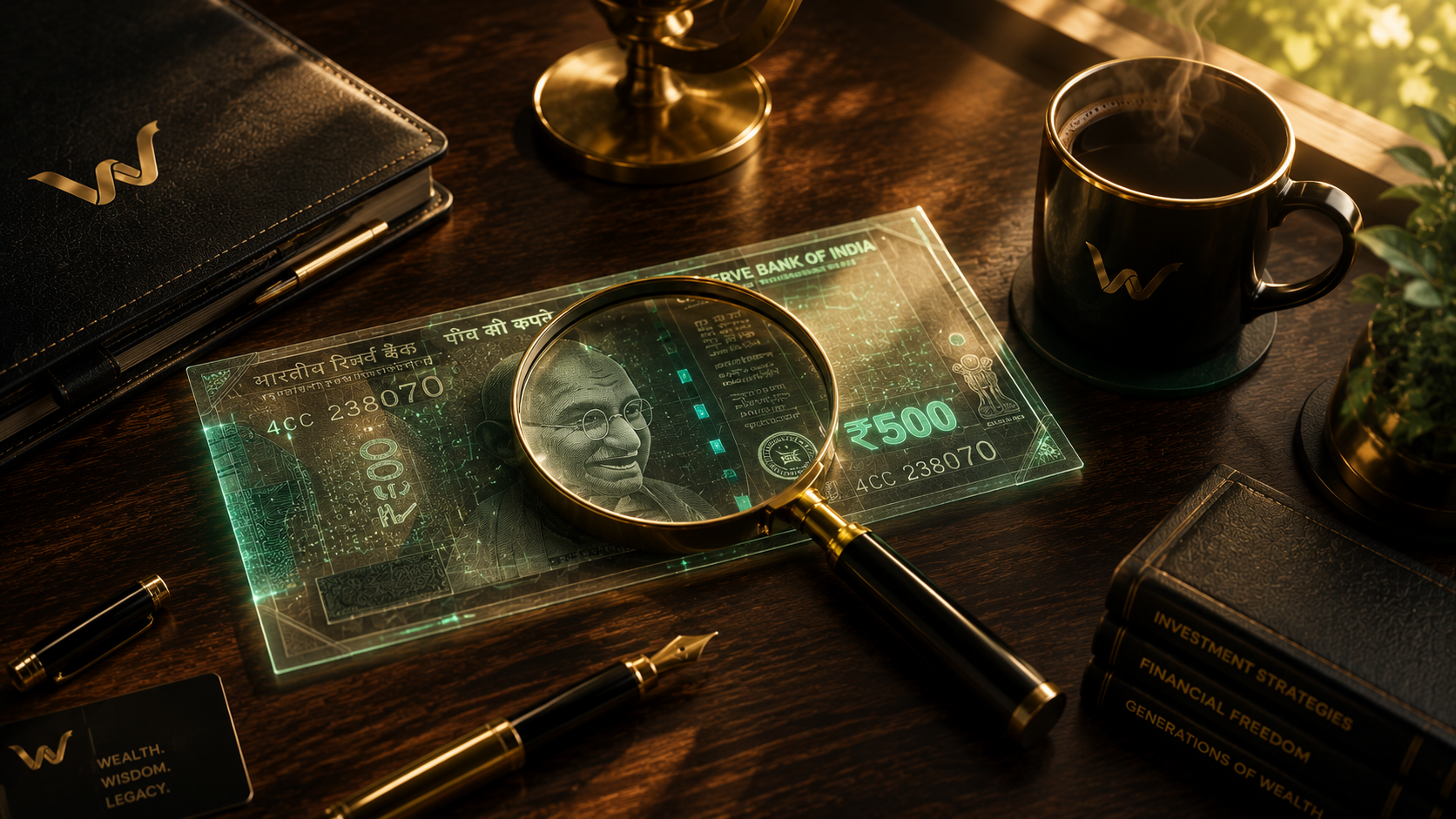
Despite the beautiful, meteoric rise of digital payments like UPI, physical cash remains the absolute bedrock of India’s everyday economy. The transition from traditional cotton-paper to advanced plastic is not a step backward; it is a vital technological upgrade. Naturally, any change to our currency brings back memories and anxieties of sudden rule changes. Today, we break down exactly what happened, why the RBI is making this shift, and most importantly, why you do not need to worry about your old notes.
“The move towards polymer notes is a practical step aimed at drastically improving durability. This is especially important for smaller denomination notes where the ‘velocity of circulation’ is extremely high, and the lifespan of traditional paper is incredibly low.”
V-Mint Capital Macroeconomic DeskWhat Exactly Happened?
In a massive ₹3,000 Crore initiative, the Finance Ministry has greenlit a field trial for the RBI to print and distribute 1 billion pieces of ₹10 notes and 1 billion pieces of ₹20 notes made entirely of polymer plastic. The printing presses, managed by the Bharatiya Reserve Bank Note Mudran Private Limited (BRBNMPL), have already begun the process of securing the specialized polymer sheets required for this historic rollout.
Why Did It Happen? (The Velocity of Money)
To understand why the RBI is specifically targeting the ₹10 and ₹20 denominations first, we need to understand a simple concept called the Velocity of Money. Large currency notes (like the ₹500 note) are often stored safely in wallets, home lockers, or bank ATMs for extended periods.
However, smaller denominations change hands dozens of times a single day. They are folded, crushed, exposed to moisture at vegetable markets, and constantly passed between buyers and sellers. Because of this high velocity, traditional cotton-paper notes fray, tear, and degrade at an alarming rate. The RBI spends a disproportionate amount of capital constantly printing, distributing, retrieving, and destroying these low-value paper notes just to keep the local economy functioning smoothly.
The Benefits: Why Plastic is Better
Polymer banknotes are constructed from a specially engineered, thin, and highly flexible plastic film. While a single plastic note is initially more expensive to manufacture than its paper counterpart, the long-term benefits for the country are undeniably powerful:
| Feature | Traditional Cotton-Paper Notes | Advanced Polymer Notes |
|---|---|---|
| Lifespan | Short (requires constant, costly replacement) | 2 to 4 times longer than paper |
| Durability | Absorbs water, sweat, and tears easily | Waterproof, dirt-resistant, and tear-proof |
| Security | Standard watermarks and security threads | Transparent windows and embedded holographics |
| Hygiene | Harbors bacteria and moisture | Non-porous and significantly cleaner |
The Environmental Question
A common and highly valid concern is whether introducing billions of pieces of plastic into the economy is an environmental misstep. The RBI anticipated this issue and commissioned The Energy and Resources Institute (TERI) to conduct a comprehensive Life Cycle Assessment.
The findings were deeply reassuring. When traditional cotton-paper notes degrade, they are shredded and typically end up in landfills or are incinerated, releasing carbon. Polymer notes, however, operate in a closed-loop recycling system. When a plastic note finally reaches the end of its extended 4-year lifespan, it is not thrown away. It is cleanly granulated, melted, and fully recycled into useful industrial plastic products such as compost bins and plumbing fittings. Because of this infinite recyclability and longer lifespan, polymer actually boasts a significantly lower overall carbon footprint than paper currency.
Who is Affected and What Changes for You?
If you are a business owner handling heavy daily cash, or simply a consumer buying groceries, this change is entirely positive. You will soon start handling sleek, clean notes that don’t tear easily in your pocket. The days of taping together torn ₹10 notes or having a shopkeeper reject a soiled ₹20 note will gradually become a thing of the past.
Will My Old Paper Notes Become Invalid?
This is the most important question for every family. The government has been explicitly clear to prevent any market panic: This is a progressive trial, not a demonetization. The new polymer banknotes will simply be issued alongside the existing paper banknotes. Your current ₹10 and ₹20 paper notes will remain fully valid legal tender indefinitely. You do not need to rush to a bank to exchange anything.
What Should an Investor Do?
As an investor, you don’t need to take any direct financial action regarding your portfolio. However, it is deeply encouraging to see the central bank modernizing our physical infrastructure in tandem with our world-class digital UPI systems. This upgrade drastically reduces the long-term printing costs for the RBI, making our broader macroeconomic system more efficient.
Stay calm, accept the new notes freely when you see them, and continue focusing your energy on your long-term wealth creation goals.
Navigate the Economy with Confidence
From physical currency upgrades to digital payment shifts, the Indian economy is evolving beautifully. Ensure your personal wealth strategy is built to thrive in this new era.
Consult Our Wealth Desk