
Can You Lose All Your Money in a Mutual Fund?
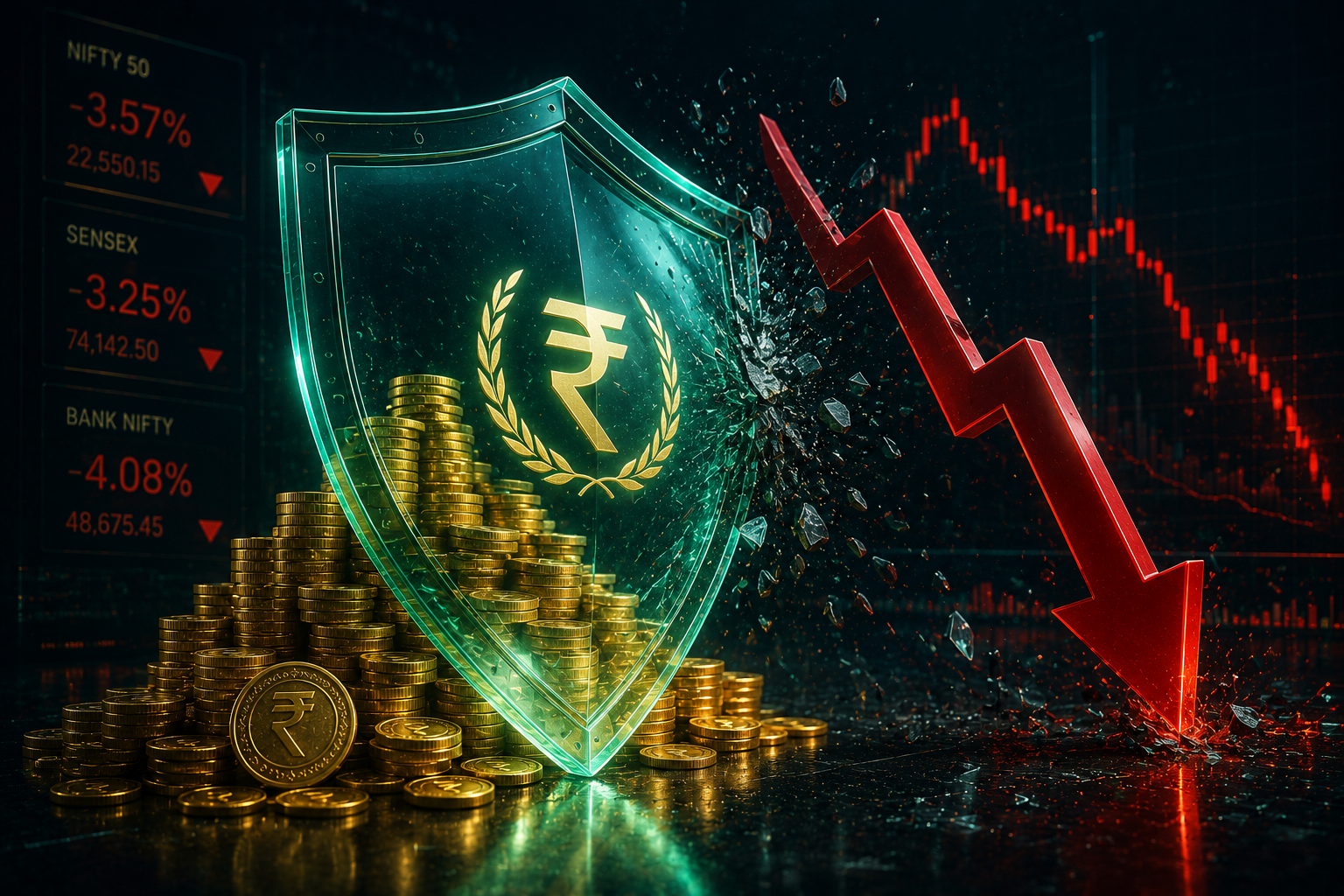
The single biggest psychological barrier that prevents individuals from investing their hard-earned money is the deep-seated fear of total capital wipeout. At the V-Mint Capital desk, the most frequent anxiety we address with new clients is: “If the stock market crashes, can the value of my mutual fund drop to absolutely zero?”
The financial media loves to sensationalize market corrections, painting pictures of investors losing everything. But the honest, data-backed truth is entirely different. It is mathematically and practically almost impossible to lose 100% of your money in a broad-market Equity Mutual Fund.
Here is exactly how structural mathematics and strict SEBI regulations act as an impenetrable fortress around your capital.
The Mathematics of Diversification
To understand why mutual funds don’t go to zero, you first must understand why direct stocks do go to zero.
When you buy shares of a single company directly, your risk is 100% concentrated. If that specific company engages in fraud, gets crushed by debt, or loses its market share, it can file for bankruptcy. When a company is delisted, its stock price goes to zero, and the investors lose everything. We have seen this historically with companies like Yes Bank, DHFL, and Kingfisher Airlines.
A Mutual Fund is structurally entirely different. When you invest ₹10,000 into a Flexi-Cap Mutual Fund, that money is not given to one company. The professional fund manager divides it across a highly diversified basket of 50 to 100 different top-tier businesses. Your ₹10,000 now owns tiny fractions of Reliance, HDFC, TCS, Infosys, L&T, and Bharti Airtel simultaneously.
Market Risk vs. Permanent Capital Loss
We must distinguish between a temporary drop and a permanent loss.
Mutual funds carry Market Risk (Volatility). This means the Net Asset Value (NAV) of your fund will absolutely fluctuate. During major macroeconomic events—like the 2008 Financial Crisis, the 2020 COVID-19 pandemic, or sudden political shifts—the stock market can correct violently. Your portfolio might temporarily show a drop of 20%, 30%, or even 40%.
But a drop is not a loss unless you panic and sell.
Historically, the Indian stock market has a 100% success rate of recovering from every single crash in its history and pushing to new all-time highs. If you continue running your SIP (Systematic Investment Plan) during a crash, you are actually buying more mutual fund units at deeply discounted prices, which aggressively accelerates your wealth when the market inevitably recovers.
The ultimate SEBI Protection: What if the AMC runs away?
The second most common fear is structural: “What if the mutual fund company (AMC) like SBI Mutual Fund or Nippon India simply shuts down or runs away with my cash?”
This is a valid question, but structurally impossible in India due to the iron-clad regulatory framework built by the Securities and Exchange Board of India (SEBI). A mutual fund operates under a stringent three-tier structure:
- The Sponsor: The company that sets up the fund (e.g., HDFC or ICICI).
- The AMC (Asset Management Company): The professionals hired to make the buying and selling decisions. Crucially, the AMC does not hold your money.
- The Custodian: An independent, highly regulated financial entity (like HDFC Bank or SBI SG Global Securities) that physically holds all the shares and cash.
If an AMC shuts down, they cannot touch your assets because they don’t have access to them. The Custodian simply transfers the management of your assets to a different, healthy AMC, or the assets are liquidated and the exact current value is credited directly back to your registered bank account.
Conclusion: The Real Risk is Not Investing
You cannot lose all your money in a mutual fund, but you are guaranteed to lose your purchasing power if you leave your money sitting idle in a savings account earning 3% while inflation runs at 6%. The real risk is failing to outpace inflation.
Invest with Total Peace of Mind
At V-Mint Capital, we construct highly resilient portfolios designed to weather market storms and protect your capital from permanent loss. Book a consultation to start investing securely.
Secure Your Financial Future