
Pharma Tariff Threats: What the US Policy Means for Indian Portfolios
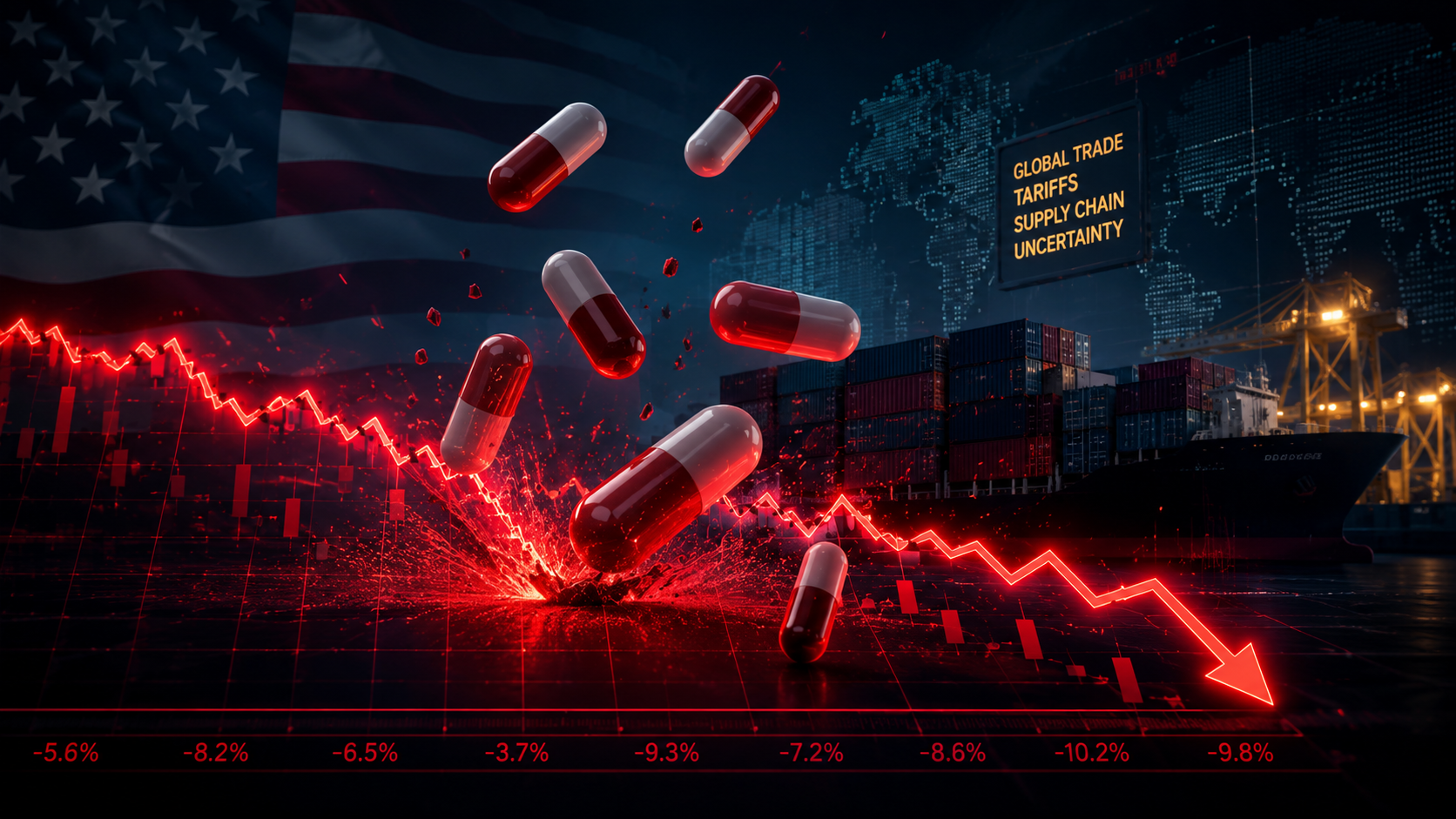
In a move designed to fundamentally reshape global healthcare supply chains, US President Donald Trump announced a sweeping, phased tariff roadmap targeting imported generic medicines. The announcement, delivered via his Truth Social platform, is a cornerstone of the broader “America First” trade agenda, aimed specifically at reshoring pharmaceutical manufacturing back to the United States.
While policies surrounding patented and innovative medicines remain unchanged, this targeted focus on generics poses a severe, long-term challenge to India. Known as the “pharmacy of the world,” India is the largest supplier of affordable generic drugs to the US, heavily exposing the sector to these punitive trade barriers.
The 2028 Tariff Roadmap: What Exactly Was Announced?
Rather than an immediate shock, the Trump administration has opted for a phased escalation intended to serve as an ultimatum for foreign drugmakers. The timeline is structured as follows:
Phase 1: The Zero-Tariff Buffer (Now until August 1, 2028)
Effective August 1, 2026, all generic drugs brought into the United States will retain a 0% tariff for a two-year transition period. This grace period is explicitly designed to give companies time to “build Plant and Equipment” within the US.
Phase 2: The 100% Penalty Phase (August 1, 2028 to August 2029)
Following the transition window, any imported generics that fail to shift production will immediately face a crippling 100% tariff for a period of one year.
Phase 3: The 200% Permanent Levy (August 2029 Onward)
If manufacturers still refuse to localize production, the tariff will double to a permanent 200%.
The Stakes for the Indian Pharmaceutical Industry
The numbers highlight why Dalal Street reacted nervously. In 2025, India exported a staggering $9.7 billion worth of pharmaceuticals to the US. According to the Global Trade Research Initiative (GTRI), this accounted for 38% of India’s total global pharmaceutical exports of $25.8 billion.
Indian generic medicines are structurally embedded in the US healthcare system, utilized widely for treating hypertension, diabetes, cancer, infectious diseases, and mental health disorders. In fact, generic medicines account for more than 90% of all prescriptions dispensed in the US, making the market utterly crucial for Indian drugmakers.
However, operating margins for generic drugmakers typically range from 10% to 20%. A 100%—let alone 200%—tariff cannot be absorbed without materially destroying profitability.
Market Reaction: Nifty Pharma Takes a Hit
The announcement triggered immediate selling pressure. The Nifty Pharma index fell nearly 2% in early trade on Wednesday as investors rapidly weighed the structural risks.
- Sun Pharmaceutical Industries, Cipla, Dr. Reddy’s Laboratories, and Lupin all saw shares fall between 2% to 2.5%.
- Aurobindo Pharma tumbled nearly 3.48% (Rs 1525.50).
- Zydus Lifesciences, Alkem Laboratories, and Torrent Pharmaceuticals also registered declines of up to 2%.
While companies like Aurobindo Pharma and Dr. Reddy’s already possess a substantial manufacturing presence within the US, others rely heavily on their cost-efficient manufacturing facilities back in India. Cipla appears relatively better insulated because India remains its largest market, but its North American exposure is still significant.
What Should Mutual Fund Investors Do?
If you hold Sectoral/Thematic Pharma Mutual Funds, the immediate instinct might be to redeem. However, trusted financial professionals advise against panic selling. Here is why:
- No Immediate Earnings Shock: Because the 0% tariff remains in place until July 31, 2028, there is no immediate impact on corporate cash flows.
- Time to Adapt: The two-year “breathing space” gives highly capable Indian management teams the time necessary to acquire existing US facilities, forge partnerships with US contract manufacturers, or pivot towards more complex, higher-margin products.
- Leverage the Decline: For investors utilizing Systematic Withdrawal Plans (SWPs) or SIPs in diversified flexi-cap funds, sector-specific dips like this simply allow your fund managers to rebalance or purchase more units at a lower Net Asset Value (NAV).
As always, building wealth requires patience and a diversified retirement strategy rather than attempting to time geopolitical news cycles.
Need to Rebalance Your Portfolio?
Don’t let market headlines derail your financial planning. Partner with V-Mint Capital for trusted, long-term portfolio structuring.
Schedule a Portfolio ReviewPharma Tariff FAQs
What is the new US tariff on generic medicines?
How does this impact the Indian pharmaceutical industry?
Which Indian pharma stocks are most affected?
Should mutual fund investors sell their pharma sector funds?
Are patented or branded medicines affected by this tariff?
How can Indian companies survive a 200% tariff?
Will this cause medicine shortages in the US?
Why is Trump implementing these tariffs?
Why Investors Choose V-Mint Capital
We execute sophisticated wealth strategies mapped to your life goals.
AMFI-Registered
Operating compliantly as an officially registered Mutual Fund Distributor (ARN-360741) in India.
Personalized Assistance
No customer service queues. You get direct, accountable portfolio insights tailored to your financial timeline.
100% Digital Process
From paperless KYC verification to advanced portfolio tracking, execute everything securely online.
Transparent Execution
We earn incidental distribution trails directly from AMCs. There are absolutely no hidden advisory fees charged to you.
Serving India & NRIs
Our digital infrastructure seamlessly supports global NRIs with FATCA compliance, KRA updates, and NRE/NRO investments.
Long-Term Philosophy
We ignore short-term market noise. Our strategy focuses entirely on sustainable, compounding wealth creation.